
Speaker
David Bird
Speech Date
July 9, 2012
Issue
Issue 17
David Bird is an independent historian based in Melbourne. He was born in Tasmania and studied Classics and History at the University of Tasmania, later taking his doctorate in Australian history at the University of Melbourne. He is the author of J.A. Lyons, the “Tame Tasmanian”, on which he spoke at the Sydney Institute in 2008. David Bird also is a regular contributor to Quadrant. To discuss the topic of his most recent book, Nazi Dreamtime. Australian Enthusiasts for Hitler’s Germany, David Bird addressed The Sydney Institute on Monday 9 July 2012.
HITLER’S GERMANY DOWN UNDER
DAVID BIRD
In the early part of 1945, as the ruins of their country crashed around their ears, the two most interesting figures of the Third Reich, Adolf Hitler and Joseph Goebbels, made predictions about the future of their national socialist Idee or “Idea”. Goebbels, buoyed by the momentary recapture by the German army of some obscure Silesian town (retaken by the Red Army only days later), suggested that national socialism might still come to be regarded as the “ideology of the century”.
A number of Australians had been interned without trial as suspected traitors and likely collaborators with the enemy
A short distance away from the ruins of his Propaganda ministry, beneath the ruins of his Reich chancellery, Hitler opined that in 100 years or so, a movement with similar ideals to that of the Nazi party would arise. I’ll assess the validity or otherwise of their predictions at the end of this talk, but let us today concentrate on the appeal and geographical spread of their “Idea” from 1933 to 1942 in our own country for, although Hitler was intensely Eurocentric (to the frustration of his Australian disciples), his influence was felt as far away as the southern continent, where it underwent something of a transformation to produce what today would be called “national socialism with Australian characteristics”.
In March 1942, Labor Minister for the Army Frank Forde announced in the House of Representatives that a number of Australians had been interned without trial as suspected traitors and likely collaborators with the enemy. He told the parliament that, “We shall stand no Quislings, whether they come from the highest or the lowest.” Sitting next to Forde in the chamber was the newly arrived General Douglas MacArthur, who concluded following this parliamentary session that, if Australians could fight as well as they could argue, victory seemed assured. Whether or not the internments without subsequent trial of several dozen people that had just occurred were justified or not (and a 1945 Judicial Commission concluded that several of them were not, criticising Attorney-General Evatt accordingly) the fact was that Australia did contain a number of Quislings from the “highest and lowest”. And although most of them had kept their heads down from September 1939 onwards, their attraction to Imperial Japan was considered sufficient, following Pearl Harbour, Darwin and Rabaul, to put them behind barbed wire – most were released within the year, but this is a separate story.
The German revolution was then fine to this group of Australian onlookers, as long as it stayed in Germany (although the New Guard leader Eric Campbell later changed his mind on this matter following an odyssey to the Reich)
Let us go back to the rise of Hitler in the early 1930s and to those Australians who found the ideology, the “Idea” he preached attractive. Some, the first major group of this discussion, thought that the “German revolution” (as the Nazis called it) was perfectly suited to the German temperament and that by destroying German communism, the German leader had done the whole of Europe a service – the Sydney New Guard journal, Liberty, for example thought in 1933 that the Germans had thereby “settled their account” outstanding since their alleged atrocities during the Great War. The German revolution was then fine to this group of Australian onlookers, as long as it stayed in Germany (although the New Guard leader Eric Campbell later changed his mind on this matter following an odyssey to the Reich).
I have detailed in the book Nazi Dreamtime the generally favourable responses of Australian tourists to what they saw of Nazi Germany and the favourable reactions of official travellers such as the 1936 Olympic team, NSW Premier B S Stevens and of Attorney-General Robert Menzies, amongst others, the great bulk of whom were impressed with what they saw of Hitler’s new Reich and overwhelmed with a sense of Deutschesschwaermes – an enthusiasm for the new Germany, fostered by a propaganda system that was keen to stress that the new Germany was indeed a new society, but also keen to stress the contradictory notion that Germany had returned to normality following the chaos of the Great Depression and the declining years of the Weimar republic.
the young Manning Clark, postgraduate student at Oxford from mid-1938 onwards, was impressed without becoming a Nazi enthusiast
Most Australian first-hand observers fell for this propaganda line, whether it be the young lady from Melbourne who joined a labour camp for the “League of German Maidens” in the Black Forest or Robert Menzies the inaccurately self-described “irresponsible fellow from outback” who in August 1938 was obviously impressed with the material achievements of the rejuvenated Germany and with the spirituality of the new society. However, Menzies and many of the others in this group had the good sense to realise that this system, admirable though it was and (as Menzies stated in an October 1938 speech) to some degree exemplary, was not largely applicable back home in sunny, democratic Australia.

Mr. & Mrs. Manning Clark at home – in Australia – 1940
Similarly, the young Manning Clark, postgraduate student at Oxford from mid-1938 onwards, was impressed without becoming a Nazi enthusiast. He was, however, clearly infected with a degree of that Deutschesschwaermes to an extent that could only have proved embarrassing at a later time. We now know that he was not present at Bonn on the morning after Kristallnacht (on the night 9-10 November 1938). Clark arrived there a fortnight later and only a considerable exercise of intellectual gymnastics can excuse the decades of deception, even self-delusion, that followed that particular oversight.
had Manning Clark’s outlook to Germany, Nazism and Hitler been aired publicly, he would have been interned in Britain alongside those fascist sympathisers
More importantly for this discussion, Clark’s private diary 1938-39, which covers the extended stay that he enjoyed in Nazi Germany from November 1938-January 1939 and its aftermath, makes it perfectly clear that Clark was not, as he later maintained, horrified by what he saw. I invite anyone to study that diary (in the National Library) and conclude that he was so horrified. They could only do so after an astonishing feat of selective reading.
The details of Clark’s first-hand observations of the Nazi system are in my book, where readers will find, for example, that he did not even mention Kristallnacht until a December entry, where he expresses an understanding of the Nazi explanation of these events and soon suggests that any judgement on Nazism must be delayed until the German revolution is more advanced. Throughout the diary, until the events of April 1940 (and the end of the phony war) changed his mind, Clark repeatedly expressed sympathy and understanding for the German position and his disgusted opposition to the anti-Nazi outlook of other students and lecturers at Oxford. As I have related, once the war started, had Manning Clark’s outlook to Germany, Nazism and Hitler been aired publicly, he would have been interned in Britain alongside those fascist sympathisers who did share their opposition to the war openly (amongst them was C.E. Carroll, the Tasmanian-born editor of the Anglo-German Review). Only after his return to Australia in 1940 and his transition from Geelong Grammar to the University of Melbourne (on May Day 1944) do the Clark diaries reflect the transition to the Manning Clark we all know. I suspect, however, that had German arms triumphed in the “Greater German Struggle for Freedom” as they called it, we may have witnessed an historian of quite a different complexion. Certainly, Australia’s leading Nazi enthusiast (P.R. Stepehensen) who later befriended Clark, thought so.
the only aspect of Nazism that Lodewyckx found regrettable in peace time was the decline in student numbers at German universities
Clark’s youthful aberrations may, in part, be explained by his intense desire to fit into the Melbourne family circle of the Lodewyckx clan. Dymphna, whom he extracted from the University of Bonn in January 1939 and married, was the daughter of Augustin Lodewyckx, the Flemish-born Professor of German at the University of Melbourne. Lodewyckx was a fanatical, pro-Nazi individual and described in his sanitised official Melbourne University biography as a Flemish nationalist and (in contradiction) a “liberal”, who had sent his daughter to complete her secondary education in 1933 to Munich, the capital of the Nazi movement, and later to the University of Bonn.
Lodewyckx was so pro-Nazi in his writings and radio addresses (where he likened Hitler to Luther) that he was almost recruited, by an agent close to Deputy Führer Hess’s office, as an instrument of agitprop within the German community – one who could spread enthusiasm for the new regime within the broader Australian community. Although Professor Lodewyckx declined the offer, he did so in what the Nazis described as a friendly manner and continued in any case to espouse the merits of the new society (the only aspect of Nazism that Lodewyckx found regrettable in peace time was the decline in student numbers at German universities).
Lodewyckx was joined in this Platonic enthusiasm for Nazism by Melbourne University French Department’s Professor Chisholm, an enthusiastic supporter of the Gallic ultra-Right who expressed his full sympathy for the anti-Semitic program of the German government and who only abandoned his flirtation with Nazism once Hitler signed his August 1939 pact with Stalin. To Chisholm, this was evidence that the German ideology was too left-wing and he abandoned it with considerable hostility, although he could still describe European collaborators in the Melbourne Argus in 1941 as “well-meaning dreamers”. Chisholm had been one of them until a minute-to-midnight, which in part explains his fierce advocacy of the Free-French cause thereafter.
These academic fellow travellers and enthusiasts lead us into the second category of those Australians who did believe that the lessons of German Nazism were applicable back home and that Australia should accordingly shed democracy in favour of an Antipodean version of that Nazi “Idea”. The Nazi philosopher Alfred Rosenberg could never quite decide, even in his Nuremberg cell in 1946, whether national socialism was suitable for export or whether it was exclusively German in nature. But enthusiasts for Hitlerism overseas had already made up their minds that it was.
By July 1936, Stephensen had abandoned the Left in favour of the authoritarian alternative, the ultra-nationalist Right, in part owing to the influence of his new employer – wealthy Sydney businessman Billy Miles (father of Bea Miles)
The chief amongst them in Australia was P.R. “Inky” Stephensen, Rhodes Scholar, publisher, literary agent, journalist and author – a clever man of great wit and charisma, but a poor judge of character. This 1924 Queensland Rhodes Scholar was a noted communist in the 1920s, despite the toothbrush moustache, and had by 1936 failed in several publishing enterprises in both London and Sydney. In France he had befriended the proto-fascist D H Lawrence who had urged him to “astonish the burghers”, and which he proceeded to do for the rest of his life. Although he later admitted that they often astonished him.
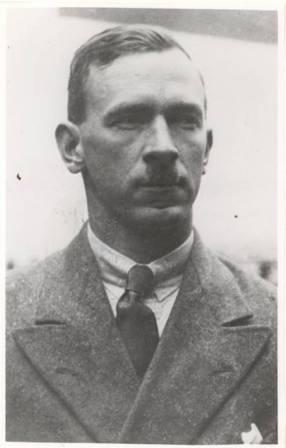
‘Inky’ Stephensen strikes his “Hitler” pose – c.1936
By July 1936, Stephensen had abandoned the Left in favour of the authoritarian alternative, the ultra-nationalist Right, in part owing to the influence of his new employer – wealthy Sydney businessman Billy Miles (father of Bea Miles). Together, they established a monthly journal, the Publicist, which peddled revolutionary nationalism, anti-Semitism and an Australian variety of Nazism from its Elizabeth St office in the T&G building. This so-called “Australia First” circle was not immediately a formal political organisation, although Stephensen wanted it to be, but was something very close to it.
Australia First was a pro-Nazi, ultra-nationalist, anti-British lobby group that gathered around itself a circle of quasi-Nazi dreamers who lovingly read its instalments of the entirety of Hitler’s speeches, often over five issues with points italicised by Miles where he considered them particularly relevant to an Australian audience (including Hitler’s speech of January 1939 warning of the Vernichtung or “annihilation” of Jewry). Although not yet a party, the AF circle issued policy points that clearly indicated some future intention to become one. Amongst these points were those for an “Aryan Australia” (eugenically well beyond the untouchable White Australia Policy) and for “National Socialism” or an an end to the system of parliamentary democracy. Weekly Monday evening radio broadcasts over 2SM, introduced by the theme of Carmen given Miles’ antipathy to modern music, set out a program of national resurgence that admitted its inspiration from Nazi Germany and to a lesser extent Fascist Italy. Even Imperial Japan was admired for its status as an Empire free of Jewish influence.
many literary types accordingly gathered at the Thursday afternoon “Yabber circle” gatherings at the Shalimar café near the T&G building, including Miles Franklin
Stephensen was not only a political agitator; he still retained literary ambitions. His official title at the Publicist was “literary adviser” and he aimed at a combination of what he called “politicals” and “poeticals” – many literary types accordingly gathered at the Thursday afternoon “Yabber circle” gatherings at the Shalimar café near the T&G building, including Miles Franklin (a long-standing friend of both Stephensen his wife Winifred) and Xavier Herbert, the author of Capricornia, the gargantuan manuscript which was rejected by all publishers at home and abroad throughout the 1930s until Miles agreed to publish it in January 1938.

Miles Franklin – from pioneering feminist to “Australia First”
Out of gratitude, Herbert publicly endorsed the aims of the Australia First circle over the radio and his career never looked back. Only gradually did Herbert distance himself from Stephensen, the “world’s greatest publisher”, as he had called him, eventually satirising the deceased “Inky” as the “Bloke” in Poor Fellow My Country in 1975.
Xavier Herbert – newly acclaimed author, thanks to the Publicist
Frustrated in his desire to form a political party, Stephensen happily worked on his “blood-and-soil” agenda by incorporating Aboriginal symbolism and spirituality in the struggle against the burghers
Miles Franklin too, despite the untrammelled misogyny of Billy Miles, continued to subscribe to the Publicist and to associate herself with the AF circle throughout this period up to its extinguishment in March 1942. The Miles Franklin literary committee understandably prefers to focus on her earlier career as a pioneering feminist rather than this later period of her career where she happily subscribed to Australian ultra-nationalism and to its foreign models.
In Adelaide, the Jindyworobak (“to annex, to join”) literary movement was similarly seeking to combine Aboriginal symbolism and literary dreaming into an Australian oriented white dreamtime
Frustrated in his desire to form a political party, Stephensen happily worked on his “blood-and-soil” agenda by incorporating Aboriginal symbolism and spirituality in the struggle against the burghers and against Australia’s “British-First” politicians like Prime Minister Lyons (although they exchanged some cordial correspondence immediately prior to Lyons’s death in early-1939). Bolstered by the theory of the “Black Caucasian”, as espoused by the Swiss Professor Tauber who arrived in Sydney on April Fools’ Day 1938, Stephensen peddled the idea that the Aborigines were the original “Aryans” and that northern Europeans (like his Danish ancestors) were returning “home” by coming to the southern continent. No theory, not even the German variety of Nazism, could perhaps have infuriated mainstream Anglo-Saxon Australians at the time to a greater extent than this one – that whites and Aborigines should mix their blood and their culture in order to produce what Stephensen was calling a “white dreamtime”. In so doing, they would produce a uniquely Australian vision of “blood-and-soil”, an Australian version of the volkisch, Nazi ideology then transforming Germany and shortly the whole of Europe. Stephensen took delight, for example, in seeking to spoil the bread-and-circus observance of the Sesquicentenary in Sydney through organising the Aboriginal “Day of Mourning” in January 1938. The pamphlets and newspaper issued by the protesting Aboriginals were, astonishingly, all printed and organised by the staff of the Publicist. “Aryan Australia” had met, and embraced, Aboriginal indignation.
In Adelaide, the Jindyworobak (“to annex, to join”) literary movement was similarly seeking to combine Aboriginal symbolism and literary dreaming into an Australian oriented white dreamtime. This movement was under the guidance of the poet and teacher Rex Ingamells and harboured the talents of the poet Ian Mudie (although not a formal Jindy until later).
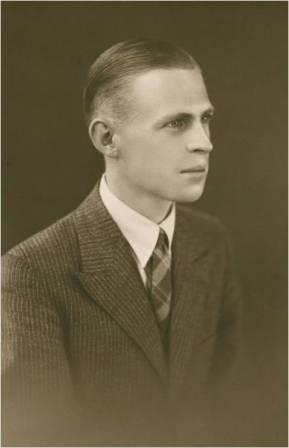
‘Rex’ Ingamells – founder of the Jindyworobak movement
Despite the reservations of many of its members about the politics espoused by the AF circle, by late 1941 Stephensen had brought the two streams of politicals and poeticals together. Ingamells thought that he could associate his literary movement with AF without the Nazi trappings. He was mistaken and the post-war Jindies never quite recovered their pre-war standing given these wartime connections.
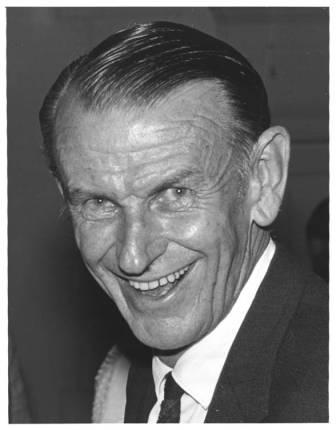
Ian Mudie – the authentic voice of “Australia First”
Hardy Wilson, renowned architect and aesthete, planned a concentration camp in the Dandenong ranges near Melbourne (“Israelia”) to house the new arrivals
Once that war had started, the Publicist became more subdued about Hitler’s Germany (which it labelled a rival, not an enemy), but soon it was waiting anxiously for a German victory which would then allow it to inaugurate a “New Order” in Australia. Inky saw himself as waiting for the call of the nation, like an Australian Petain, and their program of “Australian Action” continued unashamedly to espouse “National Socialism” at a time when Australians were already dying in combat in North Africa and Syria. The only aspect of a likely German victory that concerned the circle was the prospect that it would result in the expulsion of European Jewry to Australia.
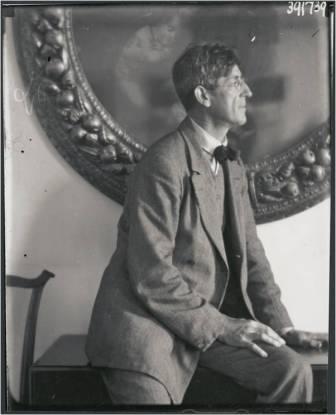
Hardy Wilson contemplates the nature of creativity
Accordingly, Hardy Wilson, renowned architect and aesthete, planned a concentration camp in the Dandenong ranges near Melbourne (“Israelia”) to house the new arrivals. Wilson had spent much of the 1930s in Tasmanian self-imposed exile, where he sought refuge in the belief that the locals were of purer stock than mainlanders, briefly gaining notoriety as the Director of the National Gallery of Victoria in August 1936. Wilson’s four-day old appointment had not been confirmed by the Victorian cabinet following his publicly avowed intention to remove “degenerate” art from the Melbourne gallery.
When an off-shoot of the AF movement in Western Australia called for a Japanese occupation of the continent to restore order in March 1942, the authorities, hitherto tolerant or simply inefficient, finally acted
A dejected Wilson blamed “the Jews” thereafter. Stephensen himself, who by then thought it best to wait until the successful outcome of the war before establishing a formal political party (he advocated Australia joining the Axis) had his hand forced in October 1941 by Mrs. Adela Pankhurst Walsh. A daughter of Mrs. Pankhurst of Suffragette fame, Adela had sought self-imposed exile in Australia in the early years of the century and been a founding member of the Communist Party of Australia.

Adela Pankhurst Walsh – the “screaming ratbag” of the AFM
Like Stephensen, she had gradually abandoned one form of authoritarian totalitarianism in favour of another and by the late-1930s was broadcasting her own pro-Nazi propaganda. Before October 1941, Adela Pankhurst threatened to found her own “Australia First Movement” unless Inky did so. In the most ill-timed move of his ill-timed career Stephensen did so, two months before Pearl Harbour turned the game into something serious with the Japanese strike southwards.
When an off-shoot of the AF movement in Western Australia called for a Japanese occupation of the continent to restore order in March 1942, the authorities, hitherto tolerant or simply inefficient, finally acted and interned those whom they thought were the leading Australian Nazi dreamers. Miles was dead, but Stephensen went behind barbed wire (for the duration), as did Pankhurst Walsh and Alexander Rud Mills, the Tasmanian mystic who had gained an interview in 1932 with Hitler at the “Brown House” in Munich in a failed attempt to interest him in a revival of the ancient Nordic religion.
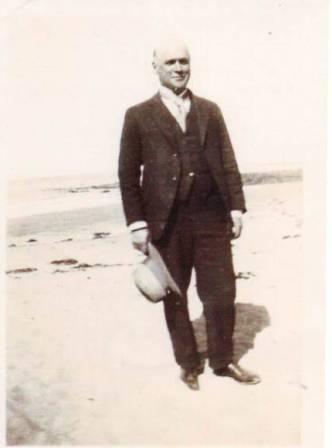
A.R. Mills – disciple of Odin and esoteric Nazi
Hitler did, however, own several of Mills’ books of execrable poetry and mystic teachings which called for a new “Odinist” church using Nazi symbolism (like salutes and funereal fire-boats) and Nordic ethics. Mills and his followers had spent a good deal of their time leaping semi-naked through bonfires at his Dandenongs weekend retreat, also called the “Brown House”. Mills had also published his own newspaper in Sydney in 1936-7 the unimaginatively titled National Socialist, complete with swastika masthead. There were two issues with all of the articles written by the editor, Mills himself. His 1942 internment gained some public attention when its validity was later questioned in the federal parliament by his former Melbourne University law school colleague, Robert Menzies.
are there any lessons for today from the Nazi Dreamtime? The most obvious is that Australia is not immune from foreign ideological contamination
The internments of the “Australia First sixteen”, as the prisoners and their adherents soon labelled them, was the end of Australia’s Nazi dreamtime – or almost. The poeticals soldiered on relatively unmolested (many of them, like Mudie, sought refuge in the military, the best place to hide), but four Australian POWs were persuaded to join the “British Free Corps” of the Waffen SS in 1943-44. One of these, alongside his German girlfriend, had witnessed the merciless destruction of Dresden in February 1945. Two of them were briefly placed in combat in 1945 by their Swedish SS commander against the Soviets, but soon withdrawn as depressed and unworthy of battle. The most audacious of these veterans spent several years after the war claiming his back-pay from the AIF as a corporal. He was eventually denied this pay increment, even though the Germans had recognised it and paid him for nearly two years as a corporal in the Waffen SS. He then lived anonymously in suburban Melbourne. One Australian woman (divorced from her German husband) also broadcast for the Reich radio, but like the quartet of SS recruits, she escaped punishment from post-war Australian authorities who deemed the cases as too vexatious.
In conclusion, are there any lessons for today from the Nazi Dreamtime? The most obvious is that Australia is not immune from foreign ideological contamination. Most Australians amidst the Great Depression had the good sense to prefer their model of “Honest Joe” Lyons to any putative home-grown dictator like Eric Campbell, but the seductive attraction of Nazism lingered even into the post-war period for some of these Nazi dreamers. The Lowy Institute recently noted that only 39 per cent of young Australians saw little or no value in parliamentary democracy. How much faith would these unthinking individuals place in any authoritarian model that may arise in a period of economic crisis, a local version of the contemporary, Greek “Golden Dawn” movement? If, or when, a real, “hard-as-nails” leader emerges at a time of real crisis in the Australia of the future, will he (or she) find a ready audience beyond the fringe-dwellers who constituted the Nazi dreamers of the 1930s?
Goebbels was wrong that national socialism would prove the ideology of the century, but perhaps his error was just a matter of timing
I suspect that the twenty-first century will provide an answer to this question and it may be that Hitler’s prediction of a similar movement in a century or so may yet prove accurate, even in our hemisphere. His movement, I remind you, was established in 1920. Goebbels was wrong that national socialism would prove the ideology of the century, but perhaps his error was just a matter of timing. One thing is certain – if this ideology does rear its ugly head again, Australia will no more be isolated from the ramifications of such a shift than it was 80 years ago. The twenty-first century is perfectly capable of producing its own totalitarian dreamers and I don’t think we have seen the last of “Aryan Australia” and its “blood-and-soil” agenda.
I leave you with two examples of wishful thinking from the old century that we may see again in the new. In 1933, the geographer Arthur Vogan, whose collections adorn the Australian Museum, said in Sydney, “We badly need something of a Hitler leader here today! Without persecution, of course.” In 1936, two Queensland psychologists and eugenicists, Bostock and Nye, similarly looked forward to a time when “a leader of great intelligence and character would arrive to dominate us for our own good”. Perhaps the Nazi dreamtime will prove a recurring nightmare.