
GERARD HENDERSON’S MEDIA WATCH DOG
ISSUE – NO. 757
5 December 2025
* * * *
The Latest – Senator Price clean bowls the ABC’s Hugh Marks during Senate Estimates; Fact-checker Sarah Ferguson gets fact-checked herself
Can You Bear It? – Ian Hamm experiences Melbourne weather and foresees the end of the world; Tom Holland praises Tony Abbott’s history of Australia; Greg Jennett continues to attempt to diminish Sir John Kerr’s reputation; Ben Hart presents as an expert on the Liberal Party while failing to pronounce the Liberal leader’s name
The ABC/Australia Institute Entente – Another free kick for the left-wing institute on News Breakfast
A James Massola Moment – Comrade Massola inadvertently questions his own paper’s editorial judgement
Shane Wright & Candlesticks – Coal power here to stay in NSW
History Corner – Malcolm Fraser’s memory, the media and The Dismissal
* * * *
THE LATEST
Senator Jacinta Nampijinpa Price clean bowls ABC’s Hugh Marks at the Senate Estimates Committee match.
As avid Media Watch Dog readers know, Gerard Henderson has been saying since Moses was in short pants that the ABC is a Conservative Free Zone. In that the ABC does not have one conservative presenter, producer or editor for any of its important television, radio or online news and current affairs programs. Not one.
In the past, some ABC managers and journalists have sought to deny this. But no one has named such a conservative.
It would be expected that ABC staff might have briefed Hugh Marks, the relatively new ABC managing director and editor-in-chief, of this line of criticism before he appeared at a supplementary Senate Estimates Environment and Communications Committee in Canberra on 2 December. But apparently not.
Nine Newspapers reported on Friday 5 December that at the Senate Estimates Committee meeting Senator Jacinta Nampijinpa Price asked Hugh Marks what journalist Andrew Jaspan referred to as “the question of the day”. Let’s go to the transcript:
Senator Price: Can you name any ABC presenter, especially in the ABC’s news and current affairs television programs, who you would consider to be conservative in their thinking?
Hugh Marks: I don’t know that that’s the right question for us to ask [sic] because, again, what any of our people think therefore should be irrelevant.
How about that? The managing director of the taxpayer funded public broadcaster told an elected senator that she was not asking the “right question”. Convenient, eh? Then he said that what any of the ABC staff think “should be irrelevant”. Well, perhaps this should be the case. But it isn’t. Some ABC presenters do not state their political views. Many do.
The reason why Mr Marks could not answer the question is that the ABC is a Conservative Free Zone. Ellie’s co-owner knows of some closet conservatives within the ABC – but they do not feel safe expressing their views, even in private, because of the all-pervading left-liberal ethos that prevails within the ABC. Particularly in its Sydney, Melbourne and Canberra studios.
Thanks to the avid reader who sent MWD Andrew Neil’s Daily Mail column of 22 November 2025. Neil once worked for the BBC and he has experience with the ABC. This is what Neil had to say:
It is not just a problem for the BBC. It is true of public service broadcasters across the democratic world. All lean Left, all are in thrall to a new generation of Leftish activist-journalists obsessed with matters of cultural identity, race and gender.
I’ve recently returned from Australia where the ABC, the equivalent of the BBC, is regarded by the centre-Right as more Left-wing than the BBC. On a previous visit, I appeared on ABC’s version of Question Time [i.e. Q&A] in which the other four panellists were all pretty much cut from the same political cloth. As you can imagine, it made for pretty dull viewing. No surprise, the show’s ratings slowly collapsed. But rather than spice it up with some contrary opinions they let it be canned. In other words, ABC preferred demise to giving a platform to views with which it didn’t agree.
Hugh Marks’ problem is that the consequence of the ABC being a Conservative Free Zone is that producers/presenters and editors choose who will be and will not be interviewed on the ABC. That’s why the ABC lacks viewpoint diversity and so many programs consist of everyone agreeing with everyone else in a left-liberal way.
7.30 “Fact Checker” Sarah Ferguson fact-checked by Matt Rennie on renewables
Just when Media Watch Dog readers thought it was safe to assume that the ABC had got out of the “fact checking business”, ABC TV 7.30 presenter Sarah Ferguson has appointed herself into the role. It happened like this.
In late 2014, RMIT ABC Fact Check was set up. The Conservative Free Zone that is the ABC co-operated with RMIT University to establish a fact check unit. As might be expected, this was essentially a left-wing outfit which had scant credibility and made little impact before it closed down in 2024.
But now it seems that Comrade Ferguson – whose ABC TV Four Corners’ three-part series “Trump/Russia”, which ran in mid-2018, was littered with falsehoods and misinterpretations – remains uncorrected on the ABC website – has set herself up as a fact-checker in her own interests. It happened like this.
On 17 November, Ferguson interviewed Opposition leader Sussan Ley about the Coalition’s recently announced energy policy. MWD counted 29 interjections by the 7.30 presenter. The Bolt Report’s count was 35. The score was difficult to tally since, at times, Ferguson seemed to interrupt her own interruptions. MWD is sure that Ferguson only once raised an angry finger pointing at Ms Ley. Just once. As MWD readers will recall, this is how the interview concluded:
Sarah Ferguson: [interjecting] I think we are going to leave it there but I will come back for the sake of all of our viewers with a fact check on the nature of the breakdown of the energy bills [in Australia]. But thank you very much for coming in and arguing the case on the policy you have just landed on. Thank you, Sussan Ley.
Sussan Ley: Thank you.
You might think that fact-checking the Liberal Party leader would have been a task undertaken by the Labor Party, the Greens or the Teals. But Ferguson decided to take on the job. On Tuesday 2 December, the ABC posted a video titled: “Fact-checking Sussan Ley’s claim about high power prices”. Here’s how Ferguson concluded her fact-check:
Power bills are high, but the rollout of renewables are not the cause. But according to the experts, the bigger point is coal-fired power generation is becoming more and more unreliable. It has to be replaced. Replacing that energy with new coal and gas-fired stations is much more expensive than renewables.
Ferguson’s opinion deserves fact-checking. At best her claim is contestable. At worst it is simply wrong. It is the government subsidised renewables roll-out which forced the gradual closure of most coal-powered stations in Australia. This was confirmed by Matt Rennie of Rennie Advisory – who supports the transition to renewables. He was interviewed on Sky News on 3 December and on ABC Radio AM on 4 December. Rennie made this point when interviewed by AM. Let’s go to the transcript:
Daniel Mercer: Matt Rennie says the growing divide between those who can electrify their homes and those who can’t is just one of many complexities at the heart of the transition. Another is the cost of the new electricity system, which he says will be higher than one running on coal, but for good environmental reasons.
Matt Rennie: It’s a much more complicated system, solar, wind firmed by batteries, and then hydro running overnight. It’s just a more expensive way of going about it, that’s something we shouldn’t shy away from.
The previous evening Rennie said this on Sky News’ The Kenny Report:
Coal-fired power is the lowest and it is the most reliable form of generation going around. With the technical life and the economic life of coal-fired power [coming to an end], there will be a change over to a new system. That new system is most likely to be renewables and storage, with a little bit of gas and some hydro.
It’s a cleaner system, but it’s a more expensive system compared to what we’ve had. There’s no point saying it’s going to be cheaper, because it’s not.
How about that? Matt Rennie fact-checked Sarah Ferguson. According to Rennie, renewables are more expensive than coal. He believes that Australia should embrace renewables – but that we should not shy away from the fact that renewables are an expensive way of providing electricity than coal.
Yet, the taxpayer funded public broadcaster believes it is proper for the ABC website to publish Sarah Ferguson’s self-interested “fact-checking” criticism of Sussan Ley. That’s “balance” ABC style.
[Perhaps you should have run this piece in your hugely popular “Can You Bear It?” segment. Just a thought. – MWD Editor.]

Ian Hamm experiences Melbourne weather and foresees the end of the world if global emissions continue to rise
It was Monday 1 December 2025 – the first day of Summer. Ellie’s co-owners grew up in Melbourne and know all too well that the First Day of Summer is not necessarily summery.
Media Watch Dog fave Ian Hamm, who is chair of the First Nations Foundation, did the Newspapers gig on the Melbourne-based ABC TV’s News Breakfast that very day. Bridget Brennan and James Glenday were the presenters. Let’s go to the transcript when discussion turned on a report by the Australian Energy Market Operator (AEMO).
Bridget Brennan: Let’s talk about the energy transition. The coal closures that we are seeing. Actually, the Energy Minister pointed this out last week as well, is part of the reason why we’re seeing some blackouts.
Ian Hamm: Yeah, so AEMO’s put out a report that saying eastern Australia faces the risk of blackouts from 2027 as the electricity grid is under prepared for the closure of coal stations, particularly the Eraring station in New South Wales – and obviously the surge in rooftop solar as well. So it’s due to a lack of infrastructure required to maintain and stabilise the flow, even though the poles, the poles and wires are in, you’ve got to have stuff that makes it all stable. So we’ve got a, that’s got to be done….
Comrade Hamm went on to tell viewers (if viewers there were) that the power went off at his Yarraville home at midnight. He did not say why. [How shocking for the leftist sandal-wearers of inner-city Yarraville. Perhaps this story should have led the ABC TV News. Just a thought. – MWD Editor.]
Then there was this:
Bridget Brennan: What’s interesting is there’s obviously rising community unease about how much power bills are costing, about this massive, enormous nationwide energy transition we’re making. Does there need to be more education to explain to everyday Australians why this is happening?
Ian Hamm: Absolutely there does. I think that’s what people are seeing. People aren’t seeing why we’re doing this, why we, why it’s taking so long, and how much in the long term we will benefit. Because the short term fix would be, “Oh, let’s just keep coal going.” But the environmental impacts of that, and climate change impacts – it’s 15 degrees on the first day of Summer in Melbourne. Could say it’s climate-related – it’s a bit odd. But if we don’t do this, the long-term effects will have such impacts we can’t even forecast.
What a load of absolute tosh. Sure it was a 15 degree maximum day in Melbourne on Monday 1 December. But it was 26.4 degrees by Wednesday 3 December.
According to your man Hamm a 15 degree maximum on the first day of Summer is “a bit odd”. No it’s not. It’s just Melbourne weather.
Moreover, Comrade Hamm, like many leftists – wants to educate (read LEARN) Australians about climate change and all that. He is of the view that Australia – which produces just over one percent of global emissions – can change the global climate. And how’s that about the claim that if the eco-catastrophists don’t get their way on emissions there will be “impacts we can’t even forecast?” Really. And here’s another question. Can You Bear It?
Tom Holland of The Rest is History podcast describes Tony Abbott’s Australia: A History as very good – in spite of the fact that Ian Hamm describes Abbott as an amateur historian
While on the topic of Ian Hamm, it’s worth remembering that he was interviewed by Sally Sara on 14 October. First up, Comrade Sara asked Comrade Hamm about his views on Tony Abbott’s Australia: A History – focusing on the issue of oral history. After Hamm had his say about the importance of oral history – Abbott believes that it is not as important as documented history – the following exchange took place:
Sally Sara: What other thoughts did you have on the former Prime Minister’s interview [by Sara on RN Breakfast on 14 October] regarding his new book?
Ian Hamm: Oh, look, I think it’s a worthy thing. An amateur historian having, instead of writing a biography of himself as prime minister doing something else. You know, that’s a worthy thing I suppose.
How condescending. And how dismissive. Ellie’s (male) co-owner happened to be listening to ABC Radio National’s Saturday Extra on 29 November when the following exchange took place:
Dominic Sandbrook: …You’ve had dealings with Tony Abbott, Tom.
Tom Holland: Tony Abbott sent me his new book.
Nick Bryant: He’s just written it, I’m reading it at the moment.
Tom Holland: Yeah, I think it’s very good. He’s the guy who, I talked about it yesterday when we’re in the Sydney Opera House. And he [Abbott] has this great story about Robert Cecil, the future Lord Salisbury, who’ll become prime minister, actually, during the time of the Jack the Ripper murders. But he goes out as a young man to investigate the Australian gold fields, and he’s wearing this white top hat, and one of the diggers picks up a lump of clay and knocks it off. And that seems very portentous in terms of, you know, the evolution of Anglo-Australia, right?
Dominic Sandbrook: Who says Australia doesn’t have a history? Come on.
Nick Bryant: And that’s a really interesting bit of the book that proves the point, really. I mean, a lot of people look at Australian history. And think, well, they just sort of copied the Brits. But actually, Australia developed a very distinctive form of democracy, which Tony Abbott’s book actually gets into, yeah.
How about that? Tom Holland and Dominic Sandbrook are two of Britain’s leading historians and Nick Bryant is a published author as avid readers will be well aware. Holland and Sandbrook also put out the very popular The Rest is History podcast. Holland described Tony Abbott’s Australia: A History as “very good”. And Bryant, who is not a conservative, made some positive comments about it. But Ian Hamm, with the evident support of Sally Sara – dismisses Tony Abbott as an “amateur historian”. Can You Bear It?
ABC TV changes its hostility to Governor-General Sir John Kerr – but continues to attempt to diminish his reputation
As pointed out in last week’s MWD, the ABC TV documentary Whitlam Dismissal: 50 Years On – which was presented and written by Greg Jennett – lacked viewpoint diversity.
Jennett blamed Governor-General Sir John Kerr for the Dismissal on 11 November 1975 – despite the fact that the Malcolm Fraser-led Opposition blocked supply and Prime Minister Gough Whitlam insisted on governing without supply. Kerr resolved a political conflict which he did not initiate.
Jennett interviewed eight individuals. Four were antagonistic to Kerr and two were critical of Kerr. One of those interviewed was an observer. Which left just one person – former Liberal Party Senate president Scott Ryan – who supported the former Governor-General. How’s that for ABC balance?
In the program that aired on 17 November, on the ABC News Channel, Jennett had this to say about Kerr:
Greg Jennett: After the Dismissal, Kerr would be spurned, scorned and ridiculed – eventually choosing self-exile in England, defensive until death.
Jennett was wrong. Kerr did not go into self-exile in England – he retired in Australia. After MWD took up the issue with Jennett and his producer, this is what Jennett now says on the documentary:
After the Dismissal, Kerr would be spurned, scorned and ridiculed. In the years that followed he chose to live in England. He returned to Australia, where he remained defensive until death in 1991.
By the way, the ABC did not acknowledge or apologise for Jennett’s error which resulted from a failure to fact-check.
Gerard Henderson knew John Kerr during his retirement in Sydney. He had many friends and contacts. Kerr was not universally “spurned, scorned or ridiculed”. Sir John’s memorial service at St James’ Church was packed. And he was not defensive about what he did in November 1975. Indeed, he said he would do it again. Clearly, Jennett did not talk to anyone who was close to Kerr and just ran the left-wing “Kerr’s a Bastard” line from half a century ago. Can You Bear It?
[No, not really. Now that you ask. Greg Jennett’s Whitlam Dismissal: 50 Years On is a piss-poor documentary which lacks viewpoint diversity and is rife with prejudice. Little wonder that ABC ran Jennett’s work on its News Channel and not on the ABC’s main channel – Channel 2. – MWD Editor.]
Ben Hart – an expert on the Liberal Party who cannot pronounce its leader’s name
Ben Hart is a former Nine, ABC and Guardian journalist. Little wonder, then, that he has a regular slot on ABC TV News Breakfast program doing the “Newspapers” gig. Comrade Hart is the founder of the Fireside communication agency.
On Friday 5 December, Hart appeared on News Breakfast and initially commented on the Liberal Party, following a report in the Australian Financial Review:
Stephanie Ferrier: It’s time now to take a quick look at what’s making news this morning. And we are joined by communication specialist Ben Hart. Ben, thanks for coming in again. We have got a little bit of an existential crisis happening in the Liberal Party at the moment.
Ben Hart: Yeah, yeah. This is an interesting story from the Fin Review, which is really looking at the fact that there’s a move on from moderates in the Liberal Party to maybe break away and create their own kind of political movement as well…. And I think you’ve got a lot of moderates in the Liberal Party saying, well, should we maybe jump ship and start our own thing. And there’s talks going on, apparently over Christmas, to see whether they launch in the new year.
Stephanie Ferrier: Well, let’s see what goes on with the immigration, their policy, because if that, if the moderates get rolled again, like they did with net zero, then it’s going to put even more noses out of joint, isn’t it?
Ben Hart: Yeah. And you’ve got Sussan Lay [sic], who’s, who is a moderate who just keeps on getting rolled on these, on these issues and time and time again. And you’ve got the moderates who supported their moderate into the into the position, and they’re thinking, well, what’s the point? Maybe we should just start our own thing.
How about that? Comrade Hart presents as an expert on the Liberal Party’s future. Yet he cannot properly pronounce the Liberal Party leader’s name. It is Ley (as in Lee). Not “Lay”. Can You Bear It?
THE ABC/AUSTRALIA INSTITUTE ENTENTE
As Media Watch Dog readers know, this blog has been monitoring the ABC/Guardian Axis and the ABC/Australia Institute Entente. That is, the ready access that journalists from the left-wing The Guardian Australia and political operatives from the avowedly leftist Australia Institute (which is based in the Canberra Bubble) get on the ABC. Meanwhile, political operatives from the conservative Institute of Public Affairs in Melbourne, Robert Menzies Institute in Melbourne, and the Menzies Research Centre in Sydney and Canberra have been effectively de-platformed by the taxpayer-funded public broadcaster. [Don’t you mean censored? MWD Editor.]
Left-wing Australia Institute gets another free kick on ABC News Breakfast and attacks the RBA
ABC TV News Breakfast seems to have cancelled anyone from the Institute of Public Affairs, Robert Menzies Institute, Centre for Independent Studies or Menzies Research Centre from appearing on the program’s “Newspapers” segment. But Ebony Bennett, the Australia Institute’s deputy director, is a regular commentator on the program. Despite the fact that the Australia Institute is an avowedly left-wing organisation. This is another example of the ABC’s lack of viewpoint diversity.
On 4 December, Comrade Bennett had this to say about the Reserve Bank of Australia when appearing on News Breakfast’s “Newspapers” segment:
Ebony Bennett: …the Reserve Bank has really punished Australian households for inflation they didn’t cause over the past couple of years. And people [are] worried, obviously, that further interest rate rises are on the horizon.
That’s just a left-wing rant. The RBA does not choose to punish Australians. Its job is to keep inflation under control and to keep unemployment as low as is reasonably possible. Ebony Bennett was not challenged by her interviewer Bridget Brennan.
For the record, MWD has no objection to Comrade Bennett appearing on the ABC TV’s News Breakfast. It’s just that her left-wing views should be balanced by hearing, on occasions, the views of a political conservative.
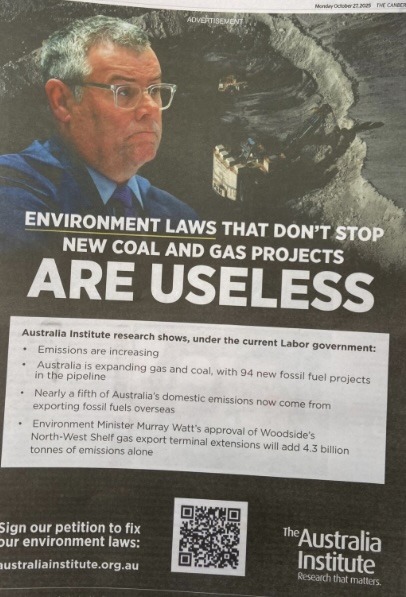
The Australia Institute – executive director Richard Denniss – is an avowedly left-wing organisation that embraces left-wing causes. Sure, on occasions, it criticises the Labor Party – but always from a Greens/Teal perspective. Here is a recent Australia Institute paid advertisement criticising the Albanese government’s Environment Minister Murray Watt.
A JAMES MASSOLA MOMENT
James Massola queries his editor’s news assessment of the Albanese/Haydon wedding
Nine’s The Sun-Herald on Sunday 30 November was replete with news of the Anthony Albanese-Jodie Haydon wedding which occurred the previous day. It led the Front Page and continued on Pages 2-5 with pieces by James Massola, Damien Woolnough, Jacqueline Maley, Rob Harris – and, wait for it, James Massola again.
In his second, and final, piece Comrade Massola wrote: “Do Australians even care the PM is getting hitched?” A brilliant question, don’t you think? But only if your man Massola was not aware of what was on Pages 1, 2, 3 and 4 of the Sun-Herald – including his own article on Page 2. Since, clearly, the Sun-Herald editor believes that the newspaper’s readers were interested in the Albanese/Haydon nuptials.
Verily, a James Massola Moment.
A James Massola Outfit Analysis
By the way, there was much interest in MWD’s coverage of James Massola’s “cool dude” t-shirt that he wore on the ABC’s Insiders on 16 November 2025 – see Issue 755 21 November 2025. To repeat the joke, MWD wondered if James Massola wore a t-shirt he thought was funny to get compliments from young ABC employees – hoping they would regale him as a “cool dude”.
Avid readers might like to know that James Massola has previously worn t-shirts with slogans in previous Insiders appearances – but he sometimes he wears plain shirts. Here are some shirts from his previous appearances on Insiders:
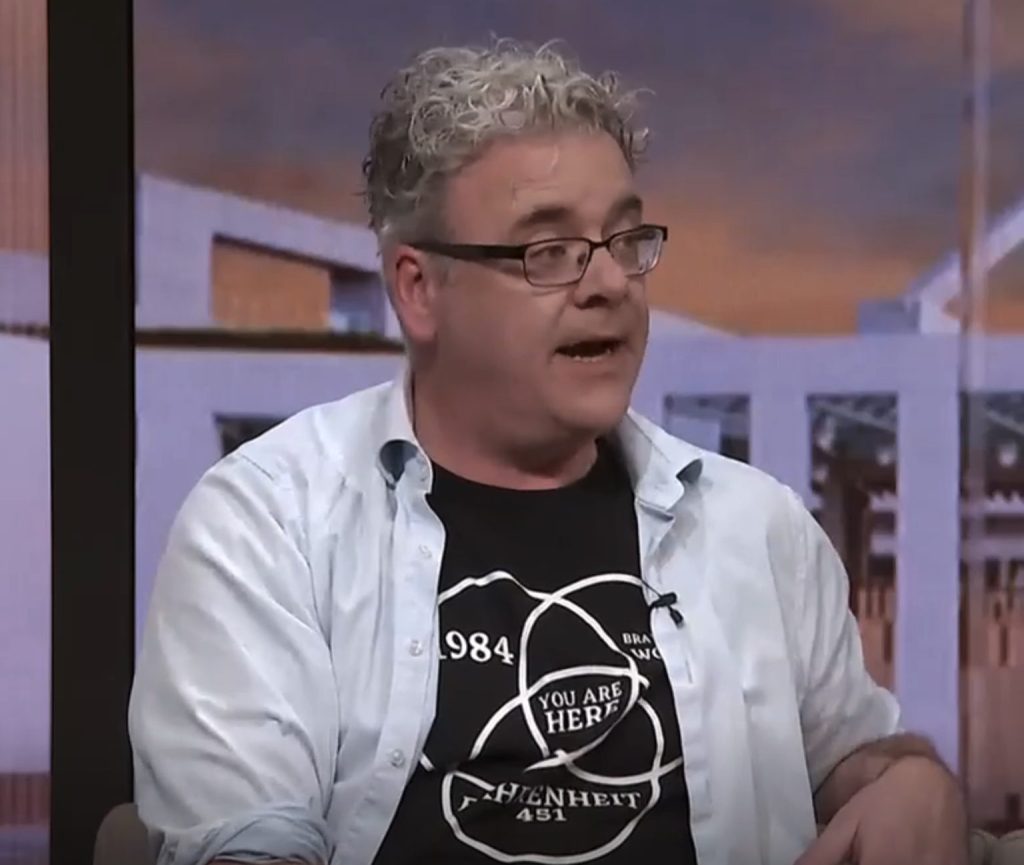
16 November 2025 – James Massola wore a 1984/Brave New World/ Fahrenheit 451.
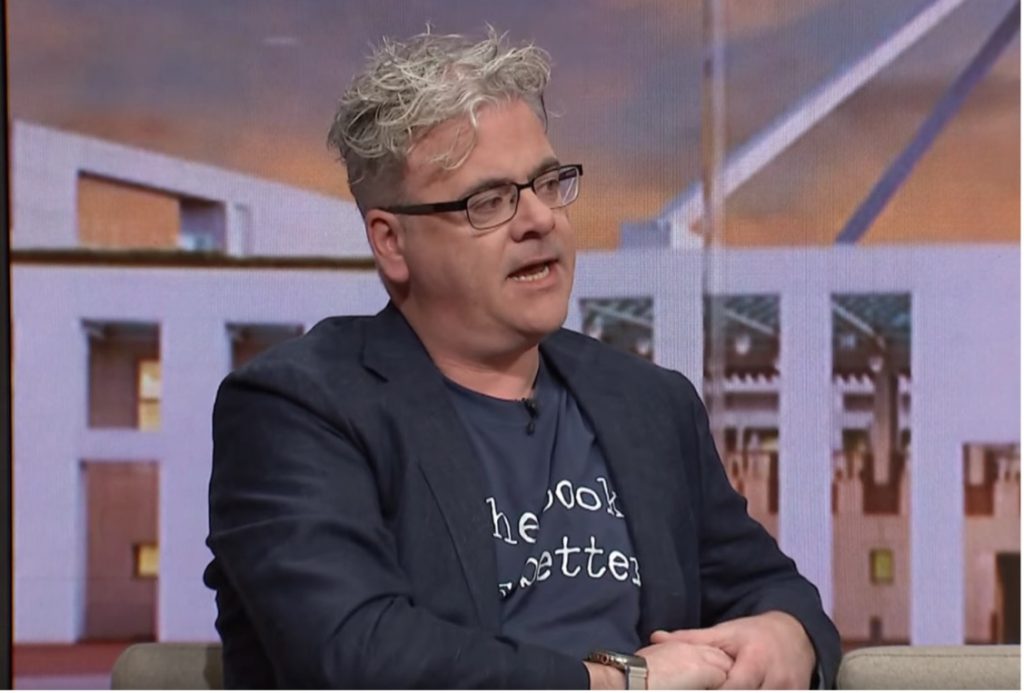
7 June 2025 – James Massola wore a dark t-shirt with white writing on it
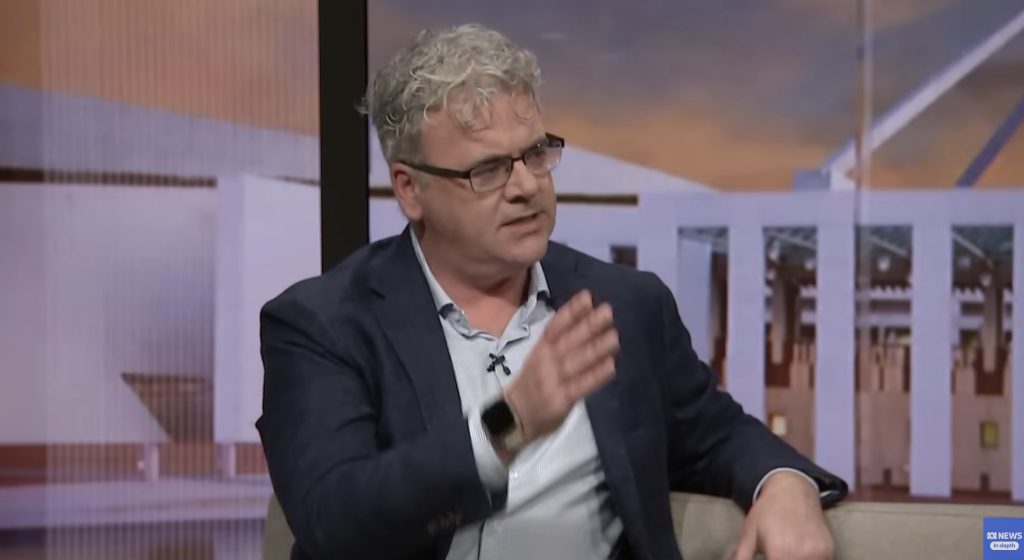
April 13, 2025 – James Massola wore a plain shirt
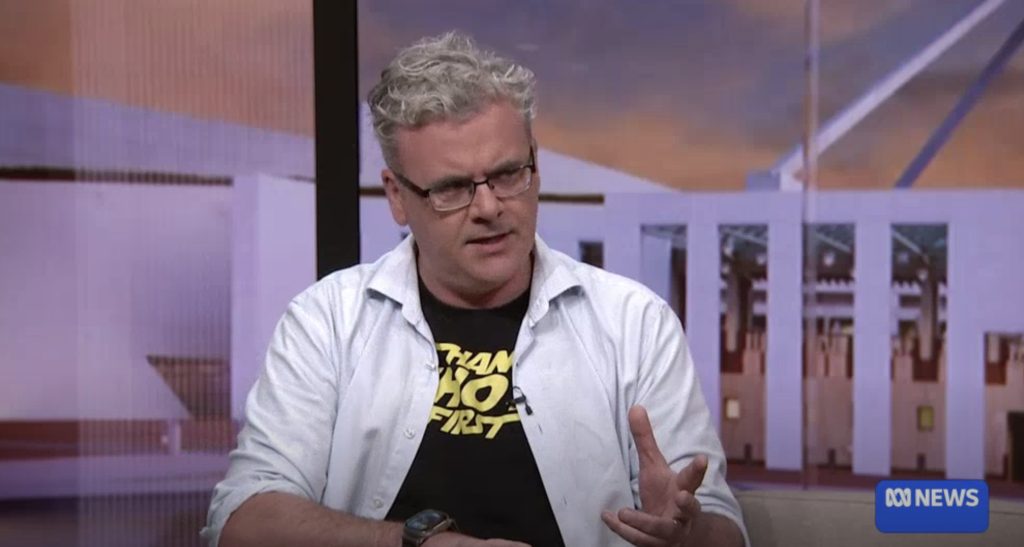
13 October 2024 – James Massola wore a black t-shirt with yellow writing on it
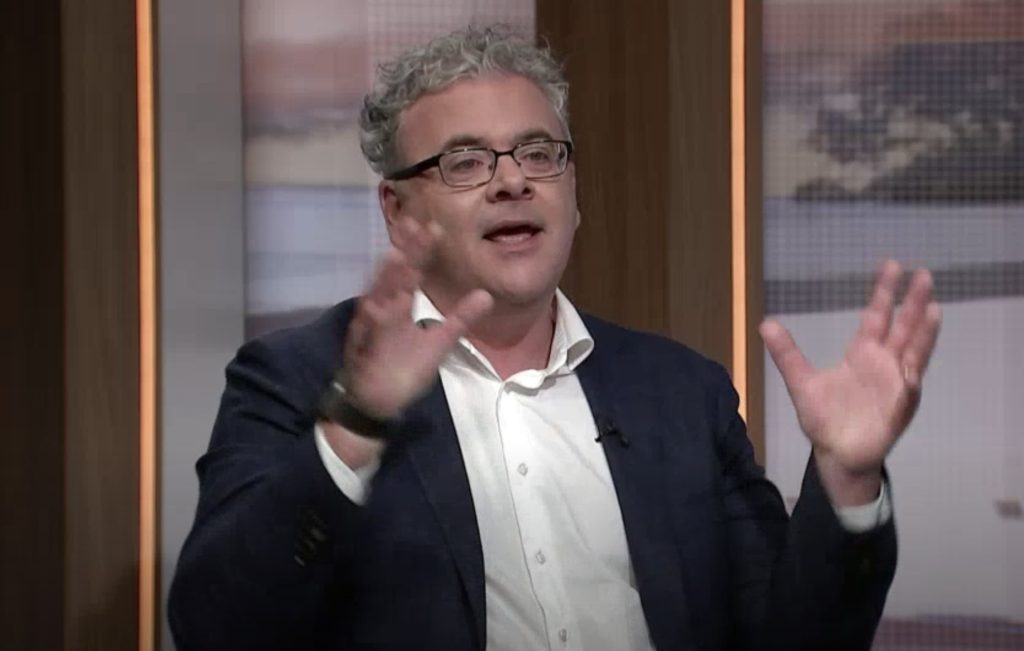
2 Jun 2024 – James Massola wore a plain shirt
Who knows what type of shirt James Massola will wear in his next appearance? Stay tuned.

As Media Watch Dog readers are well aware, Nine’s Shane Wright has risen without trace (as the late Kitty Muggeridge once said about the late David Frost) to become the senior economics correspondent for The Age and Sydney Morning Herald – not having published anything of note apart from newspaper articles and columns plus the occasional essay. Even so, you would expect a person in such an elevated position to know about the international energy market.
It’s only a few years since your man Wright ridiculed anyone who said that coal had any future as a part of energy supply – even in such markets as India, China and Indonesia. He declared on ABC TV Insiders on 11 June 2017 that “coal is like candlesticks” and compared those who said that there is still a demand for Australian coal exports with members of the Candle Makers Union circa 1870 who (allegedly) argued the case for candles over electricity. Now read on.
AEMO issues warnings about the premature end of coal power in Australia
Shane Wright would have received a nasty shock if he tuned in to ABC Radio National AM on the morning of Monday 1 December. On the line with AM presenter Sabra Lane was Daniel Westerman, chief executive of the Australian Energy Market Operator (AEMO). The reason for the interview was a new report from AEMO, which warns, among other things, that the power grid in Eastern Australia will not be ready to handle the planned closure of the Eraring coal-fired plant in the NSW Hunter Valley.
Eraring, which is operated by Origin Energy, was originally scheduled to close in 2025, but has already been extended to August 2027. There already exists provisions in Origin’s contract with the NSW government that could allow the plant to remain open until 2029. On Monday NSW Premier Chris Minns said that he was not opposed to continued negotiations with Origin about the possibility of extended Eraring.
In a recent interview, Origin Energy CEO Frank Calabria said that he considers Eraring closing in 2027 to be the “base case” but that other options could be considered. This could include a staged closure, in which some of Eraring’s four units shut down while others remain operational.
It now seems all but certain that Eraring will continue to operate in some capacity beyond 2027. So, it seems that coal will not be going the way of candlesticks in the NSW energy grid anytime soon.
HISTORY CORNER
- Part 2: Malcolm Fraser’s ‘notoriously fallible’ memory, the media and the Dismissal – including Dale Budd’s recall
There was enormous interest in the “History Corner” segment in Media Watch Dog Issue 755, 21 November 2025 titled “Malcolm Fraser’s ‘notoriously fallible’ memory, the media and the Dismissal”.
At issue was whether Governor-General Sir John Kerr, on the morning of 11 November 1975, “tipped off” Opposition leader Malcolm Fraser that he was about to dismiss Prime Minister Gough Whitlam. As avid readers are well aware, the Fraser-led Coalition in opposition was intent on blocking supply and the Whitlam-led Labor government was intent on governing without supply. When Whitlam refused to advise an election, Kerr dismissed Whitlam and appointed Fraser caretaker prime minister provided he called an election for 13 December 1975. He did, and the Coalition won in a landslide.
In his 1975 book Matters for Judgment (Macmillan 1978) Kerr wrote that Whitlam phoned him in the early morning of 11 November and indicated that he was intent on governing without supply and would advise a half-Senate election for 13 December. He did not state that his government would have supply up until a half-Senate election. Kerr then phoned Fraser who advised that the Opposition was still intent on blocking supply.
Kerr always maintained that this was all he spoke to Fraser about in their phone conversation which took place around 10 am. However, when interviewed by Philip Ayres for his book Malcolm Fraser: A Biography, Fraser said that, during the phone call, Kerr had laid down four conditions which Fraser would have had to accept in advance if he was to be sworn in as caretaker prime minister – effectively implying that Kerr had tipped Fraser off about his intentions. Kerr always maintained that the conditions – there were six not four as Fraser stated incorrectly to Ayres – were written down by Fraser on a note paper at Government House after Whitlam had been dismissed. The note was on the back page of the Agenda for the Joint Party Meeting (i.e. a meeting of the Liberal and the National Country party) which was scheduled to commence at 10 am.
Fraser mislaid the note for many years. He told journalist/author Troy Bramson that he had found this note when he began sorting his papers in the 2000s. In their co-authored book The Dismissal: In The Queen’s Name (Viking, 2015), Paul Kelly and Troy Bramston wrote that Fraser “gave Bramston a copy of it [the note] in 2013”. However, Fraser’s note was first published among the illustrations in Malcolm Fraser: The Political Memoirs which was co-authored by Malcolm Fraser and Margaret Simons, in 2010. That is, three years before Fraser gave a copy of the note to Bramston.
Gerard Henderson believes that the top of the note contains the six (not four) conditions Kerr requested from Fraser before he was sworn in at Government House around 1.15 pm on 11 November 1975 as caretaker prime minister. Henderson believes that, after he located the note many years later, it was only then that Fraser dated it “9.55, 11 Nov 1975”. Set out below is part of the back cover of Malcolm Fraser: A Personal Reflection (Connor Court, 2025), which demonstrates that the hand-writing at the top of the note is dramatically different from the handwritten time, date and signature at the bottom of the page. Moreover in the year “1975” the “7” appears to be written over an “8”. And Fraser’s signature seems to commence with a capital “J” followed by a capital “F”. Note that Fraser’s full name was “John Malcolm Fraser”.
Margaret Simons told Gerard Henderson in an email on 2 February 2010 that: “Malcolm put the name and time on the note later – he believes after the Joint Party Meeting that immediately followed the call [from Kerr].”
In order to believe Fraser on this matter, you have to disbelieve Kerr. However, since in his The Political Memoirs Fraser acknowledges “a notoriously fallible” memory, it is difficult to believe Fraser over Kerr. In any event, as Paul Kelly acknowledged in his appearance on Sky News The Dismissal: 50 Years On documentary, Fraser had no option but to accept Kerr’s conditions whenever they were laid down. Having fought for over a month to force an election, it was inconceivable that Fraser would decline to be sworn in as caretaker prime minister – especially since the conditions were both reasonable and necessary. Kerr would have known this when he phoned Fraser.
Enter Dale Budd
None of Fraser’s supporters or Kerr’s critics have been able to explain the different hand writing at the top and bottom of Fraser’s note. Clearly it was post-dated. It seems likely that, in view of his notoriously fallible memory, Fraser forgot the time of the call. Alternatively, he deliberately post-dated the note to reflect what he had told Ayres for his 1987 biography. Both the claim in Ayres’ book and the illustration in The Political Memoirs put the focus for the Dismissal on Kerr and drew attention away from Fraser. This led to claims by Kerr antagonists that Kerr had “betrayed” Whitlam and engaged in an act of “treachery”.
On the Sky news documentary Dale Budd, a one-time chief-of-staff to Fraser, supported Fraser’s recollection of the 11 November phone call. Let’s go to the transcript:
Chris Uhlmann: Gerard Henderson believes Fraser wasn’t tipped off. He maintains that Fraser’s handwritten note was made after Whitlam was sacked.
Gerard Henderson: Both Whitlam and Fraser were called to Government House when Whitlam was dismissed. Fraser, who was at Government House, was called into the Governor-General’s office, and I believe it was then that Fraser wrote them [the six conditions] down.
Chris Uhlmann: He [Henderson] highlights the use of a different pen to sign the six-point note, the stark contrast with the signature on a paper Fraser signed the same day, and the fact that the man who would become prime minister did not mention this note until years after the event.
Gerard Henderson: …And that signature of Malcolm Fraser is dramatically different from that signature of Malcolm Fraser. And they’re supposed to have occurred on the same day.
This, I believe, is a signature where he signed those notes decades later with a quite different handwriting, a massively different pen, and also a different signature. Also, the seven seems to be written over the eight. That’s why I think it was probably done in the, in the end of the 1980s. And this is a signature that he did on the same day at around the same time in November 1975. And that signature of Malcolm Fraser is dramatically different from that signature of Malcolm Fraser – and they’re supposed to have occurred on the same day.
Chris Uhlmann: Fifty years on, Fraser’s former Chief of Staff remembers it differently.
Dale Budd: I wasn’t in the room when that call came. Obviously, Kerr had Fraser’s direct line. But he made that call and I understand Malcolm Fraser told me that he said Kerr hadn’t made up his mind. But that he wanted Fraser’s agreement that should there be a caretaker government that these were the conditions which would apply. There’s no doubt, there’s no doubt that call and the content of that call was a signal to Fraser of the way the Governor-General was thinking.
Here Mr Budd was relying on what he understood Malcolm Fraser said to him at some time. So Budd’s memory of what Fraser said to him is based on what Fraser remembered about what Kerr told him. At best, this is hearsay.
As far as Media Watch Dog is aware, Budd first commented on the Dismissal in an article he wrote for Sybil Nolan’s edited collection The Dismissal: Where were you on November 11, 1975? – published by MUP in 2015. That is, four decades after the Dismissal. Early in his essay, Budd had this to say:
At 10.30 a.m., there was a meeting of all Opposition senators and members of the House of Representatives, the normal prelude to the week’s parliamentary sittings. The House of Representatives was to begin its sitting that day at 11.45 a.m., with Fraser moving a censure motion against the government. In the office our efforts were directed to preparations for Fraser’s speech in the House. [Note, according to the Joint Party Meeting, the meeting commenced at 10 am.]
After Fraser’s address, Whitlam responded. He started speaking just before 12.10 p.m., and Fraser remained in the chamber to listen. At about 12.15 p.m., while the PM was still on his feet, I received a phone call from the Governor-General’s Official Secretary, David Smith. The Governor-General wanted to see Mr Fraser. Mr Whitlam was going to see him as soon as he finished speaking in the House of Representatives, and Mr Fraser should follow ten minutes afterwards.
This call did not generate any particular excitement. During the period since the Opposition had blocked the Budget, the Governor-General had called the Prime Minister and the Opposition leader in to see him on several occasions, so he could hear firsthand the positions they were taking. Even though we thought that November 11 could be a day of resolution, the news of these meetings was not by itself very significant.
In this essay, Budd implied that neither Fraser nor his office had any indication that Kerr had tipped off Fraser that he was going to dismiss Whitlam. On the contrary, they did not regard the fact that Fraser had been called to Government House as generating “any particular excitement”. Budd’s account is not consistent with Fraser’s belated claim that, by 12.30 pm on 11 November, Kerr had already asked Fraser whether he would accept certain conditions if he was sworn in as prime minister.
Later on, in his chapter, Dale wrote that, sometime after the Dismissal, he “discovered two items on his [Malcolm Fraser’s] desk”. He continued:
The second item was a page of notes in Fraser’s handwriting, signed and marked to show they had been made at 9.55 a.m. It was the notes Fraser had made of John Kerr’s call to him at that time. Kerr had not made up his mind what he would do, and he phoned Fraser on his direct line to indicate the provisions applying to a caretaker government, should Fraser be commissioned in that role. The conditions noted by Fraser came into effect and became public later in the day. Most of them were usual for caretaker governments: they included the passage of the Budget thus ensuring supply; an immediate dissolution of both Houses of Parliament followed by an election; no new policies or appointments to be made; and no Royal Commissions or enquiries into the activities of the previous government.
In The Dismissal: In the Queen’s Name it is reported that Budd told Bramston that he (Budd) photocopied the note that afternoon stating: “I thought it was an interesting and potentially historical document”. The authors of The Dismissal: In the Queen’s Name wrote that they “have a copy of Budd’s photocopy”. However, the black-and-white copy of the note in the Kelly/Bramston book was taken from the Malcolm Fraser Collection at the University of Melbourne – the same source used by Media Watch Dog and by Gerard Henderson in Malcolm Fraser: A Personal Reflection. It was not supplied by Dale Budd.
On 24 August 2006 Gerard Henderson was advised that Malcolm Fraser would not give permission for the content of his [Fraser’s] note to be published by Dale Budd in The Sydney Institute Quarterly as part of a Letter to the Editor by Budd. This is the note that Budd said he saw in Fraser’s office on the afternoon of 11 November. This was a strange action by Fraser since he published a photo of the note four years later as an illustration in Malcolm Fraser: The Political Memoirs.
Media Watch Dog is not suggesting or implying that either Mr Fraser or Mr Budd lied about the note. Not at all. But it is a fact that memory is very unreliable – so much so that some individuals have clear “recollections” of events that never happened.
* * * *
The problem with the Fraser and Budd accounts – initially stated in 1987 and 2005 respectively – is that they both rely on memory. However, Kerr made a contemporaneous note on 16 November 1975 about the events of 11 November 1975 which he used in his book Matters for Judgment in 1978. See Malcolm Fraser: A Personal Reflection, Chapter 21.
Kerr’s view was not challenged by anyone until Fraser’s account in 1987 which was based on his “notoriously fallible” memory. The fallibility of Malcolm Fraser’s memory is evident by a large number of serious errors in The Political Memoirs which are documented in Appendix A of Malcolm Fraser: A Personal Reflection. With one exception – the errors have never been corrected – including Fraser’s claim that he won four elections. He won three.
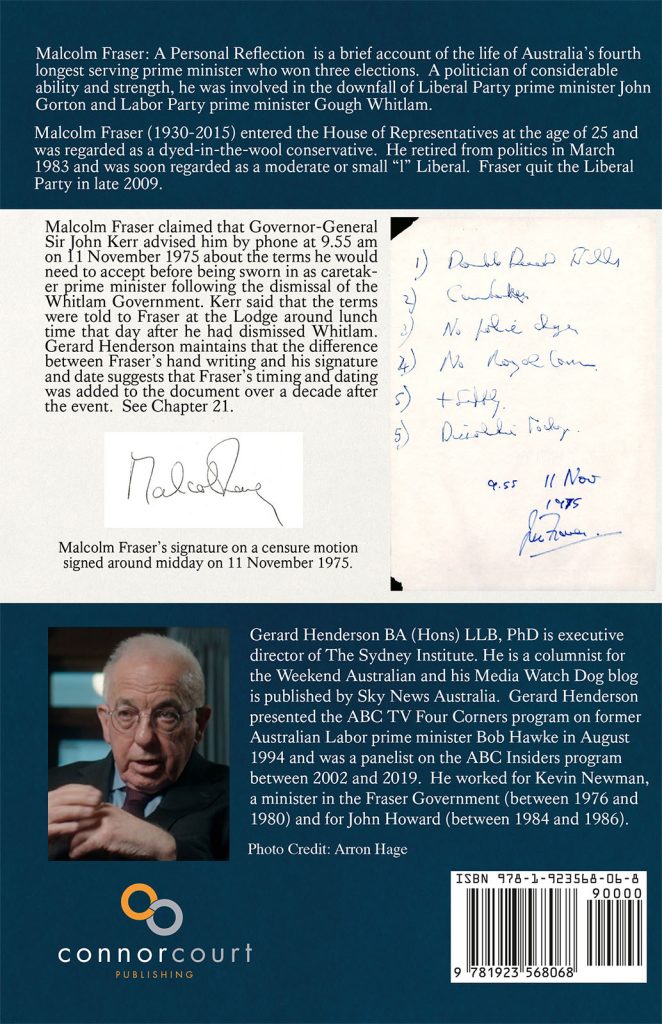
The back cover of Gerard Henderson’s Malcolm Fraser: A Personal Reflection
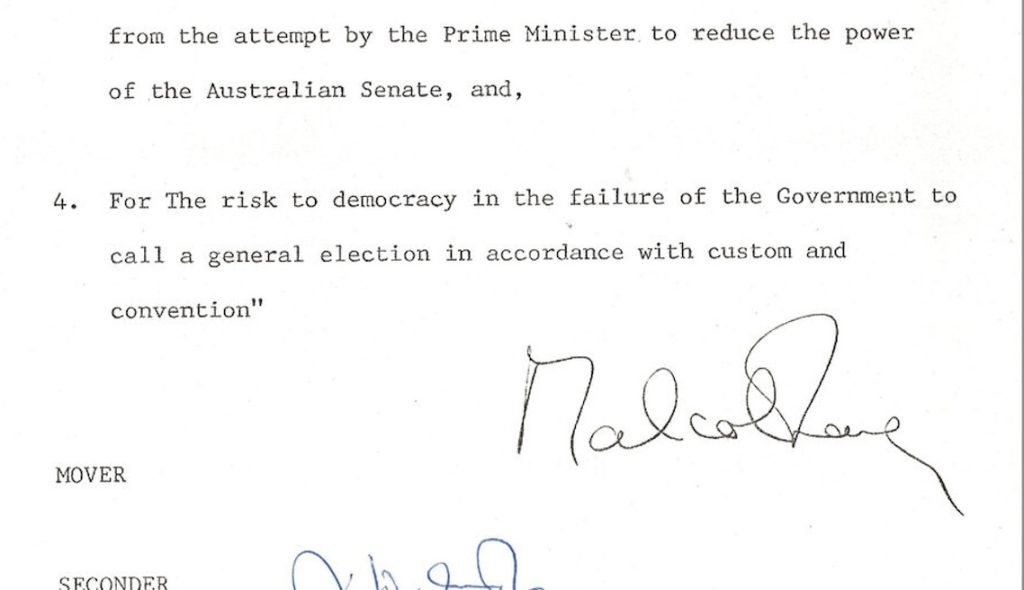
Malcolm Fraser’s signature on 11 November 1975 – when bringing on a censure motion
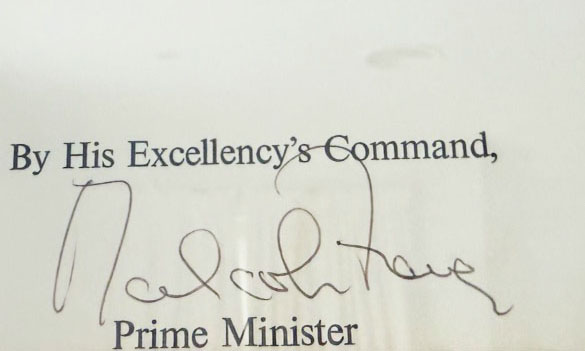
Malcolm Fraser’s signature on 12 November 1975 – when appointing a minister to his caretaker government
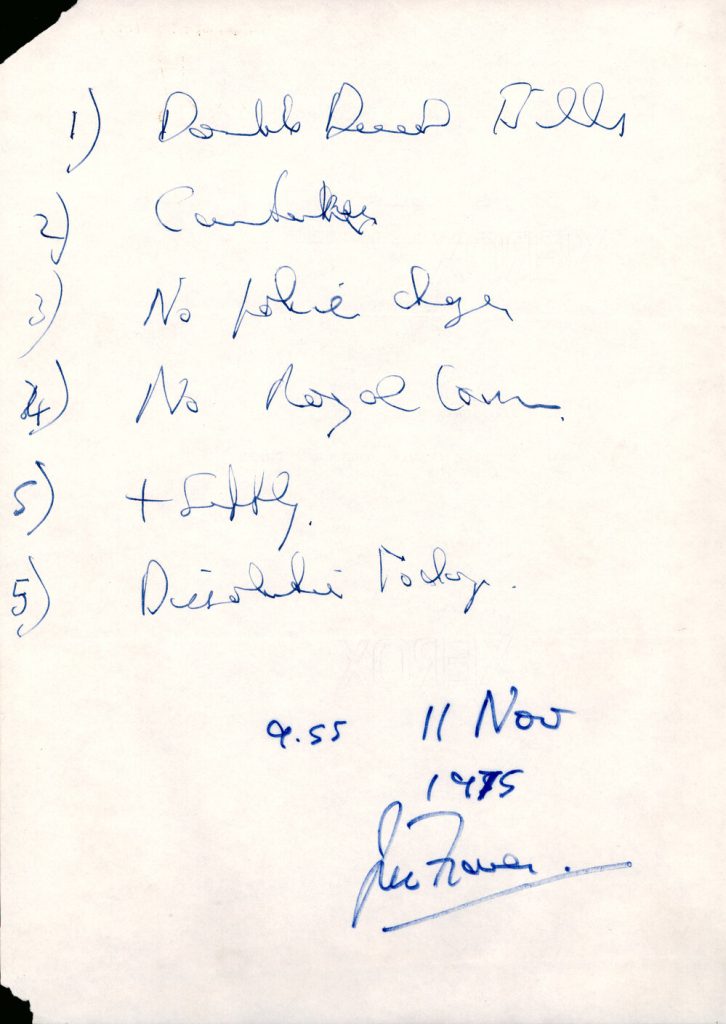
Malcolm Fraser’s signature on his note of 11 November 1975 – according to The Political Memoirs by Malcolm Fraser and Margaret Simons
Note that Media Watch Dog is willing to publish the photocopy of the note in Dale Budd’s possession which he took in Malcolm Fraser’s office during the afternoon of 11 November 1975.